Home Teams Team 24187 Code Talker
TEAM 24187 Rookie Year

Eight freshmen. Their first season. And three more together ahead.

A rookie team in the toughest league in Minnesota. A rough middle. A strong finish. A future.

Roster: 8 freshmen, all rookies This season: top half of all MN rookies Returns next year: All eight
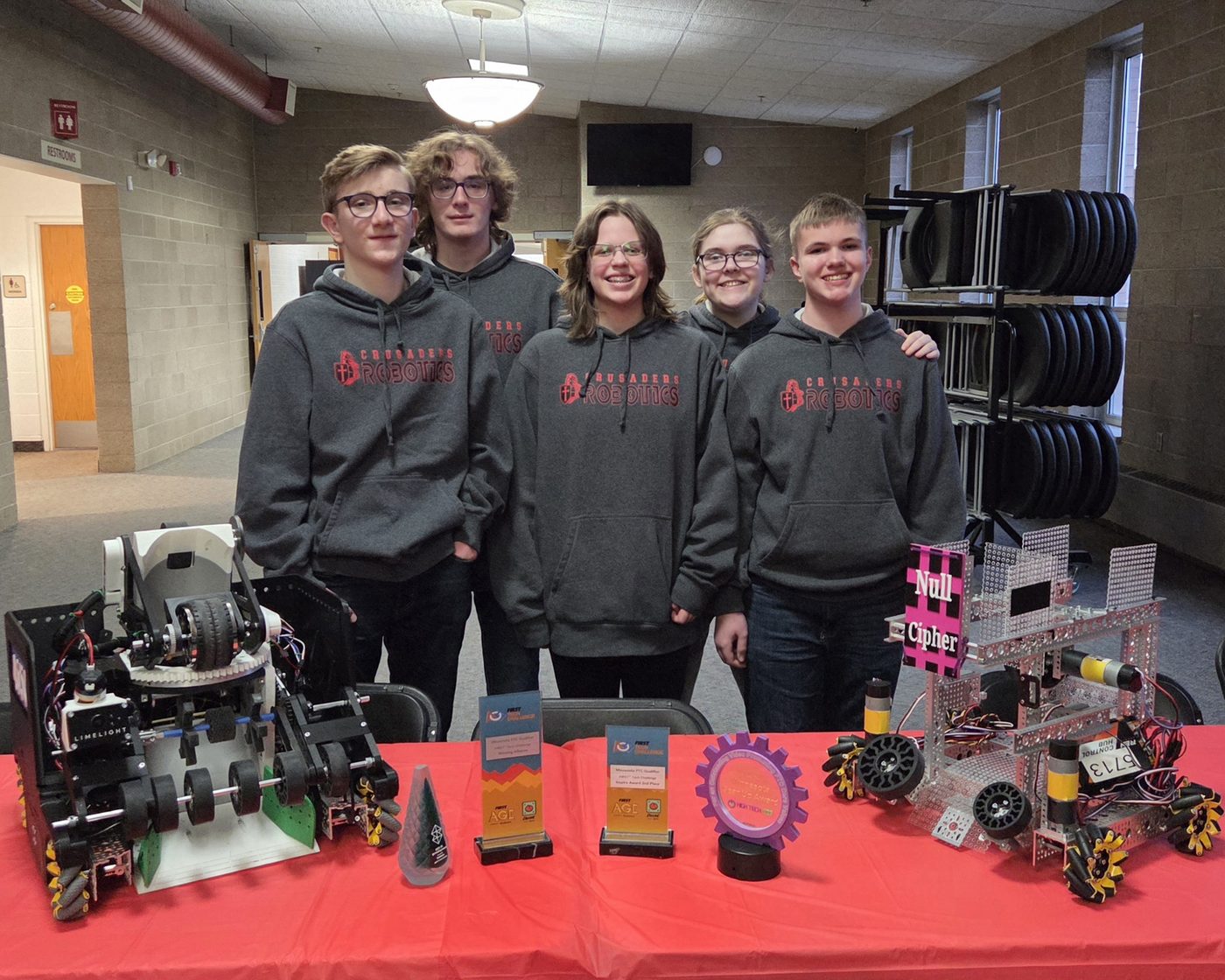
Team 24187 Code Talker — the rookie team of freshmen in matching Crusader Robotics hoodies at the spring banquet
25–26 DECODE Auto growth: 0 → 18 avg · 84-point best match
The story

Eight rookies who took a swing.

Eight freshmen walked into our robotics room in September. None of them had ever competed in FTC before — and they were sharing the room with two seasoned teams doing things that, from across the bench, looked like magic.

They could have played it safe. They didn't. Partway through the season they took a swing — a real redesign of their robot, the kind of ambitious move you rarely see from a rookie team. It pushed them hard, and for a stretch it cost them: one weekend they went 0–5.

Here's the part that matters. They didn't fold. They kept building, kept tuning, and kept getting better — week over week, right through the end of the season. Their scoring climbed, their autonomous program went from nothing to a real asset, and they finished in the top half of all Minnesota rookie teams.

For eight first-year freshmen who challenged themselves instead of coasting, that's a fantastic first season. And all eight are back next year.

They bet on themselves with a redesign, took the hit, and grew right through it. That's worth more than the record.
The robot

The robot.

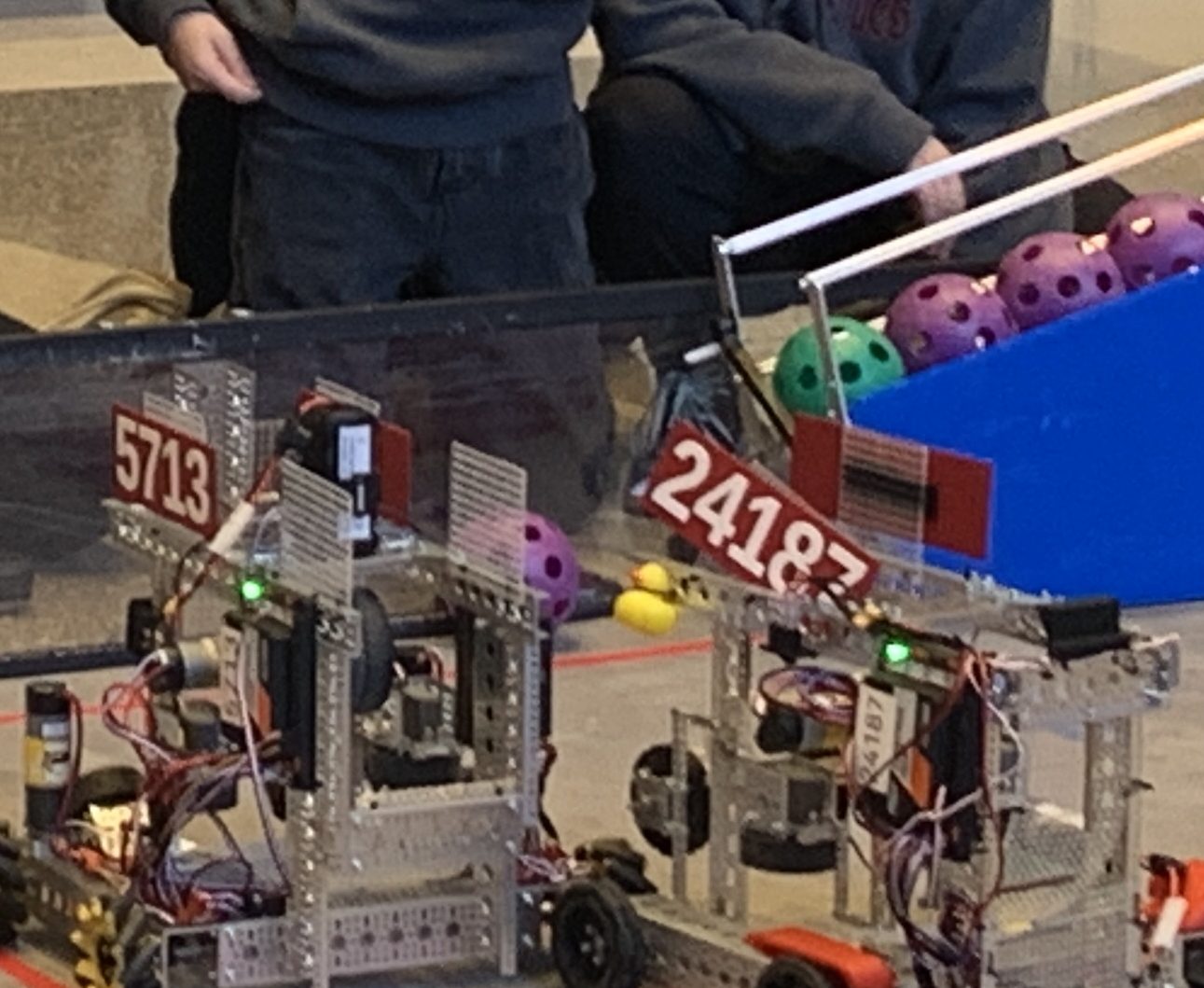
Team 24187's robot, labeled 24187, on the competition field next to teammate Team 5713's robot, with game artifacts in play
Built for: DECODE — same game as the other two teams, on a robot that grew with the team across the season.

This team didn't settle for a starter robot. Partway through the season they took on a redesign — an ambitious move for rookies — and kept building on it. By tournament time, it could do all the things the game asks for: score in two places, climb, and run autonomously.

A few things they built — and learned to build.

A working autonomous program

Their coder, working on it match after match, got the autonomous routine to about a 95% success rate by tournament time. By Meet 3, they were averaging 18 points in autonomous mode — up from zero in their very first match.

A climbing mechanism

Toward the end of the match, robots can earn bonus points by lifting themselves off the floor onto a bar. Their robot can do this — something that's not at all guaranteed for a rookie team.

A specimen alignment plate

A small piece they added to help make their scoring more consistent. Not flashy, but the kind of detail that tells you a team is thinking.

Mentorship from the older teams

Their CAD parts were machined on the CNC by the 4650 students. The 5713 sophomores helped them with their wiring. The room is built for that.

The season at a glance

25–26 DECODE results.

StageResult
Meet 1#6 in league · 3–2 (solid start)
Meet 20–5 — dropped to #14 of 17
Meet 33–2 comeback · climbed back to #12
Auto growth0 points → 18 avg over the season
Driver-control growth27 → 50 avg over the season
Total scoring growth+78% across the season
MN rookie comparisonTop half of all 26 rookie teams in the state
Best match84 points (tournament) — personal best
The roster

Eight freshmen, four years together.

All freshmen · Class of 2029

  • Marcus
  • Ethan
  • Layla
  • Evan
  • Ian
  • Matthew
  • Piper
  • Jackson
Spotlight

The whole group, three more years

What's special about this team isn't a single student. It's the group. All eight return next year. They'll be sophomores when they start the 2026–27 season. They'll be juniors the year after, with two full seasons of experience together. Their senior year, they'll be the team that knows the program better than anyone. This kind of continuity is what builds depth. You can't fake it. You can only let it happen, year after year, as kids stay.

What we learned about them this season.

A few small things from this year that say a lot about who these kids are:

Year one is for figuring out what you don't know yet. They figured out a lot.

How a gift helps this team

It gives rookies a place to start.

The rookie team's costs are similar to the other two — chassis, motors, control hubs, sensors, and the parts that get used and replaced — but with the added challenge of building a base robot from scratch for a brand-new roster.

Gifts to the program help us keep funding a true rookie team. Without it, freshmen with no FTC experience have nowhere to start.

See more

Keep exploring.